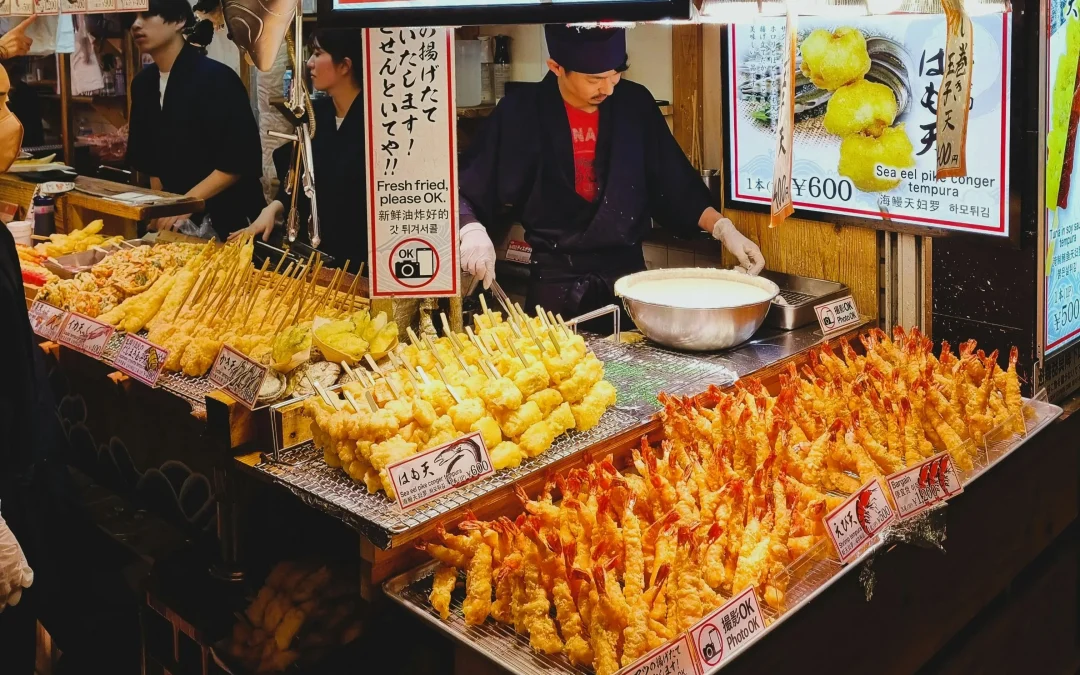
Tempura is Japan’s famous style of lightly battered, deep‑fried seafood and vegetables, known for its airy crunch and delicate flavor. It turns simple ingredients—like shrimp, sweet potato, or shiso leaves—into something elegant and almost weightless.
Foreign Roots, Japanese Identity
Tempura actually began as a foreign import. In the 16th century, Portuguese missionaries and traders arrived in Japan and brought a tradition of frying foods in batter during certain religious “Ember days.”
Japanese cooks adopted and transformed this technique, refining the batter, oil temperature, and ingredients until the dish became distinctly Japanese—far lighter and more precise than its European ancestors.
From Street Food to High Art
By the Edo period (1603–1868), tempura was popular as a kind of street food in old Edo (Tokyo), sold from food stalls near rivers and busy districts. Diners would eat skewered tempura standing up, often dipping it in a simple sauce and pairing it with sake.
Over time, specialized tempura restaurants emerged, moving the dish indoors and elevating it. Chefs began to focus on pristine seasonal seafood, fresh vegetables, and perfectly controlled oil to achieve that signature, lacy crust.
Technique at the Center
Classic tempura relies on a few key ideas: very cold, minimally mixed batter (often flour and water), hot neutral oil, and quick frying. The batter is intentionally under‑mixed so a few lumps remain, which helps create a light, crisp shell instead of a heavy coating.
Cooks work fast, frying small batches to keep everything hot and fresh, then serving tempura immediately so the contrast between crisp coating and tender interior is at its peak.
Cultural Significance in Japan Today
Today, tempura appears at many levels of Japanese dining: from casual tendon (tempura over rice) shops to high‑end counters where chefs fry each piece to order in front of guests. It’s also a common component in bento boxes and set meals, symbolizing care and a bit of luxury.
Seasonality is important: spring might feature young bamboo shoots or mountain vegetables, while winter highlights root vegetables and certain shellfish. Tempura, in that sense, is not just fried food—it’s a way of tasting the seasons in a crisp, delicate form.
Ready to try making tempura at home? Jump to the full recipe here [link to your recipe].