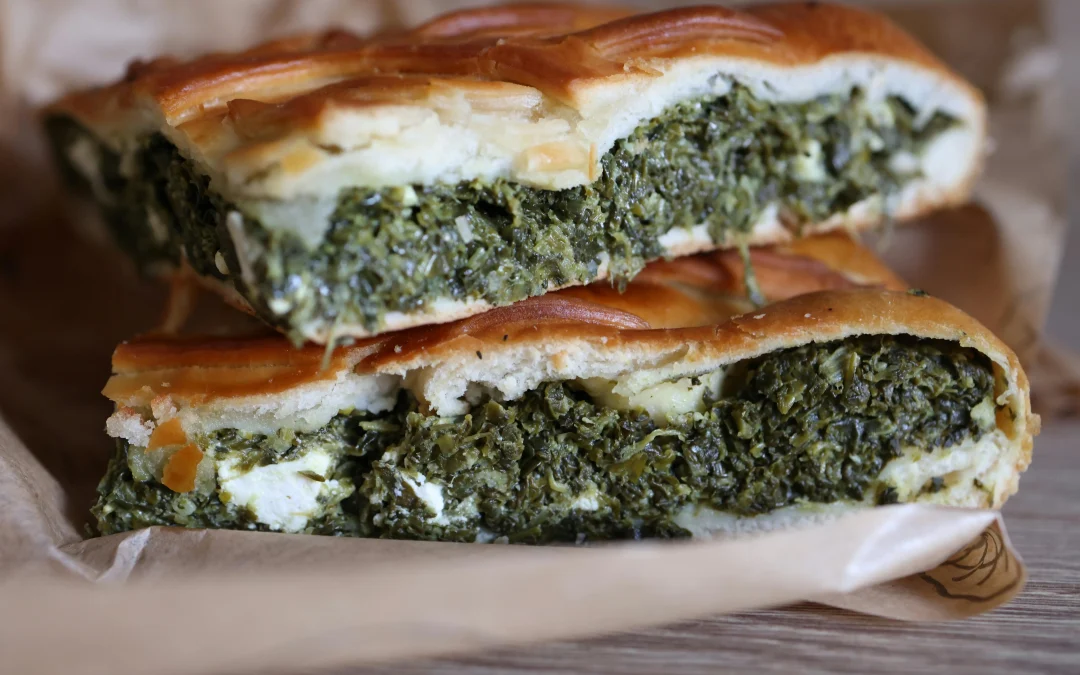
Spanakopita is Greece’s iconic spinach and cheese pie, built from flaky layers of phyllo wrapped around a savory filling of spinach, herbs, and feta. It captures the rustic heart of Greek cooking: simple ingredients turned into something deeply comforting.
Ancient and Byzantine Roots
Greek cooks have been making pies since antiquity, using thin sheets of dough to encase greens, cheese, and herbs as portable, filling meals. References to early cheese and herb pies appear in classical texts, and by Byzantine times, pie‑making with delicate “leaf” (phyllo) dough was well established.
Spinach, originally from the Middle East, reached Europe through Arab traders and arrived in the region of today’s Greece during the Byzantine period. Once Greek farmers realized how easily spinach grew, it slipped naturally into existing cheese‑and‑greens pies, eventually evolving into the spinach‑focused spanakopita we know today.
From Village Fields to Everyday Favorite
Many of the most celebrated spanakopita recipes come from Epirus in northwestern Greece, a region known for foraging wild greens and baking hearty pies. There, cooks mixed cultivated spinach with wild herbs, local cheeses, and homemade phyllo to create pies that could travel with shepherds or field workers and stay satisfying all day.
Over time, spanakopita became a flexible staple: cut into squares for school lunches, folded into hand pies for on‑the‑go snacks, or baked in large pans for family tables. Its mix of leafy greens, feta, olive oil, and herbs mirrors the broader Mediterranean pattern of using what the land offers in a nourishing, economical way.
Cultural Significance in Greece Today
Spanakopita now appears everywhere from village bakeries to city cafés and festive holiday spreads. It is served as a meze, a light meal, or part of a larger family feast, and many Greeks associate it with hospitality and gatherings—one pan can easily feed a crowd.
Recipes vary by region and household: some use only spinach while others blend in chard or wild greens; some include eggs and plenty of feta, while Lenten versions omit dairy and egg to fit fasting traditions. Despite these variations, the core idea remains the same: crisp layers of phyllo holding a moist, flavorful filling that’s meant to be shared.
Ready to bake spanakopita at home? Jump to the full recipe here.