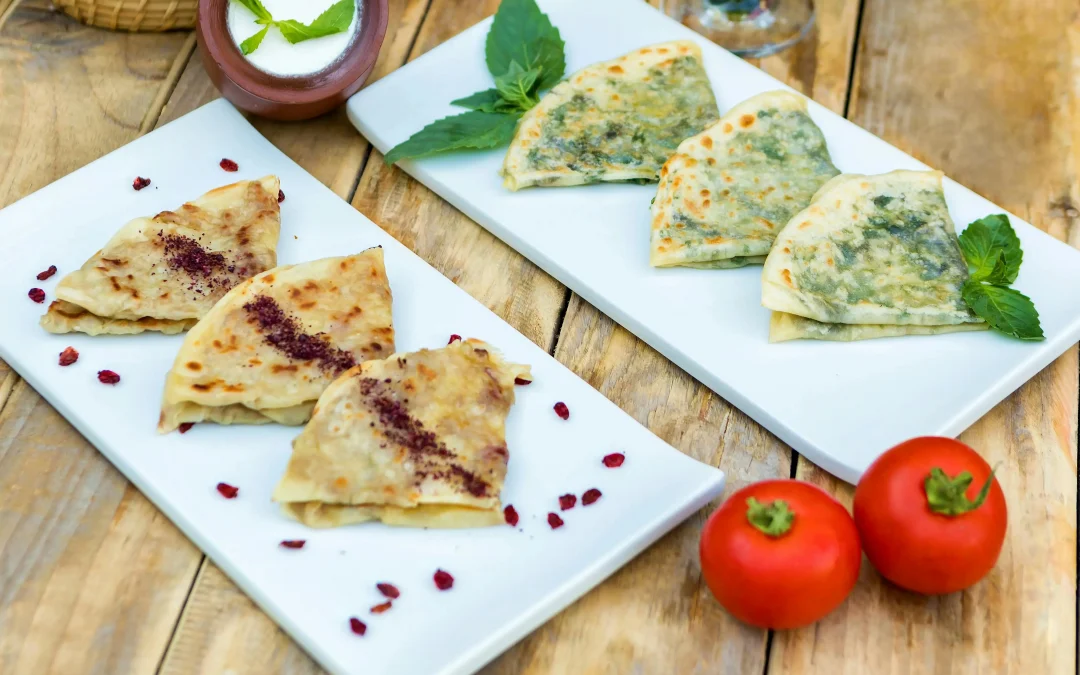
Kutab (or qutab) is a beloved Azerbaijani stuffed flatbread, rolled paper-thin and filled with fresh spring greens, tangy cheese, or spiced meat, then pan-fried until golden and blistered. These crispy half-moons burst with herbaceous flavor and are a street food favorite and family staple, especially during Nowruz celebrations. For the rich history of kutab and its role in Azerbaijani culture—from nomadic shepherds to UNESCO-recognized flatbread traditions—read more to appreciate its journey through centuries of hospitality and seasonal feasts.
Ingredients
Dough (makes 8–10 kutab)
- 2 cups all-purpose flour (or half all-purpose, half whole wheat)
- ½ tsp salt
- 1 tbsp olive oil or neutral oil
- ¾–1 cup hot water (just under boiling)
Green herb filling
- 3–4 cups mixed fresh herbs (dill, cilantro, parsley, mint, spinach), finely chopped
- 1 small onion or 2 green onions, finely chopped
- ½–¾ cup crumbled feta or soft white cheese (like suluguni or farmer's cheese)
- 1 tsp salt (less if cheese is salty)
- Optional: pinch of black pepper or ground coriander
Meat filling variation
- ½ lb ground lamb or beef
- 1 small onion, grated
- ½ tsp each cumin and coriander
- Salt and pepper to taste
For cooking & serving
- ¼ cup butter or oil for pan-frying
- Sumac, yogurt, or pomegranate seeds for garnish
Step 1 – Make the dough
- In a bowl, mix flour and salt.
- Stir in oil, then gradually add hot water with a spoon until a soft, sticky dough forms (not too wet).
- Cover and rest 15–20 minutes; the heat makes it pliable for ultra-thin rolling.
Step 2 – Prepare the filling
Herb filling:
- Mix chopped herbs, onion, cheese, and salt in a bowl. Squeeze lightly to blend flavors; set aside.
Meat filling (optional):
- Sauté grated onion until soft, add meat and spices; cook until browned and dry. Cool completely.
Step 3 – Roll the dough
- Divide dough into 8–10 golf-ball-sized pieces; cover with a damp cloth.
- On a floured surface, roll one piece as thin as possible (⅛ inch or like sturdy parchment).
- Keep remaining dough covered to prevent drying.
Step 4 – Fill and shape
- Spread 2–3 tbsp filling evenly over half the circle, leaving a ½-inch border.
- Fold empty half over to form a tight half-moon; press edges firmly to seal.
- Crimp edges with a fork or fingers for a decorative finish. Repeat with remaining dough.
Step 5 – Cook the kutab
- Heat a cast-iron or nonstick skillet over medium heat; add 1 tsp butter or oil per kutab.
- Cook 2–3 minutes per side until golden, blistered, and crisp; don't overcrowd.
- Drain on paper towels; brush lightly with butter while hot for shine.
Step 6 – Serve
- Stack warm kutab and sprinkle with sumac.
- Serve immediately with plain yogurt, green onions, or radishes on the side.
- For meat kutab, add a squeeze of lemon for brightness.
Tips & tricks
- Use hot (near-boiling) water for dough—it gelatinizes starch for extra-thin rolling without tearing.
- Chop herbs finely by hand for texture; food processor makes them mushy.
- Roll one at a time and fill immediately so dough stays workable.
- Seal edges well and press out air bubbles to prevent leaks during frying.
- Medium heat prevents burning; high heat cooks unevenly.
- Make ahead: Shape and freeze uncooked kutab between parchment; fry from frozen, adding 1 minute.
- Fresh spring greens are traditional—leeks, sorrel, or nettles work too.
- Vary fillings: pumpkin for fall, lentils for vegan. Leftovers reheat in a dry skillet.